
Maryland Lawmakers And Advocates Celebrate Passage Of State Voting Rights Act: ‘History Was Made’

Maryland lawmakers passed sweeping voting rights legislation Monday night, marking a significant expansion of protections for voters of color and setting the stage for the measure to be signed into law by Gov. Wes Moore.
The Maryland Voting Rights Act, approved April 13, is designed to prohibit discriminatory election practices and strengthen access to the ballot, particularly for Black, Indigenous, and other voters of color. Advocates say the legislation builds on the federal Voting Rights Act of 1965 while responding to what they describe as a steady erosion of those protections at the national level.
How history was made for voting rights
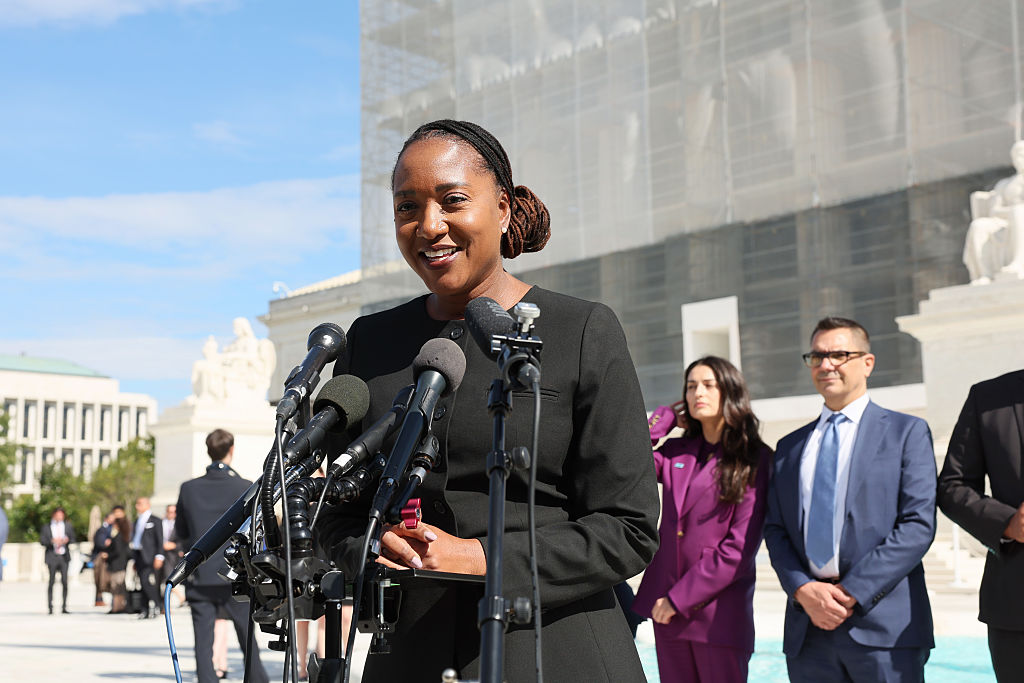
“History was made in Annapolis last night as Maryland lawmakers and advocates secured the passage of a key piece of the Maryland Voting Rights Act package,” Janai Nelson, president and director-counsel of the Legal Defense Fund, said in an exclusive interview with Blavity.
“This critical legislation will finally provide essential protections to ensure Black voters aren’t silenced by discriminatory district maps or election systems at the local level in Maryland,” Nelson added. “With this momentous victory, the Free State is living up to its moniker, creating a pathway for a truly multiracial and representative democracy to thrive in Maryland.”
How it started … how it’s going!
Maryland did it! The legislature passed the Maryland Voting Rights Act, making history and protecting democracy on bill at a time.
Congratulations to all the advocates to helped push it through—especially LDF’s MD Team! pic.twitter.com/c6tRRjoiiB
— Janai Nelson (@JNelsonLDF) April 14, 2026
The Legal Defense Fund played a key role in supporting the legislation, working alongside state lawmakers and advocacy groups as part of a broader coalition pushing for the bill’s passage.
Protecting voters of color
According to Common Cause Maryland, the act ensures that all voters can “cast meaningful ballots and participate free and fairly” in the democratic process, particularly communities that have historically faced barriers to voting.
At its core, the Maryland Voting Rights Act targets practices known as racial vote dilution — systems or policies that weaken the ability of voters of color to elect candidates of their choice. In earlier advocacy around the bill, the Legal Defense Fund explained in a February Substack post that Senate Bill 255 and its companion, House Bill 350, aim to address these inequities at the local level. The bills were sponsored by state Sen. Charles Sydnor and Del. Greg Wims.
Combating voting rights attacks at the federal level
Civil rights advocates say the need for state-level protections has become more urgent amid shifts in federal enforcement. In a 2024 report, ACLU of Maryland warned that local election systems across Maryland continue to dilute the voting strength of Black, Indigenous and other voters of color, arguing that the state must act proactively as federal safeguards face increasing uncertainty.
The NAACP Legal Defense Fund has also pointed to ongoing legal battles at the federal level. In recent weeks, the organization joined a coalition of civil rights groups suing over a Trump administration executive order aimed at restricting mail-in voting, arguing it could disenfranchise eligible voters and overstep federal authority.
With this kind of legislation, efforts to enshrine protections at the state level can persist regardless of possible federal changes.
The push for expanded voting protections has also intersected with broader conversations about disenfranchisement. In a Baltimore Beat op-ed published in March, Erika Lewis and Rianna Mukherjee highlighted disparities affecting incarcerated individuals, noting that Black Marylanders are disproportionately impacted by laws that limit voting rights.
If signed into law, Maryland will join a growing number of states adopting their own voting rights acts — like Colorado last year and Minnesota in 2024 — which represents the enduring fight to uphold democracy amid federal efforts to completely undermine the right to vote.
If you look at the history worldwide, Black people have contributed more than anybody else. They have contributed to almost Read more
The official version of Logic's "Soul Food" audio off his 'Under Pressure' album which is out now on Visionary Music Read more
For the 50 million kids who attend public schools in the US, the 2020 election is personal. Watch more 2020 Read more
In this clip from 1965, after leaving the Nation of Islam, Malcolm X appears on CBC-TV's 'Front Page Challenge' weeks Read more

I Have a Dream" is a public speech that was delivered by American civil rights activist Martin Luther King Jr. Read more

✪This one important person in Oprah Winfrey's life wanted nothing to do with her until she was famous. Years later, Read more

Relive the BEST OF Michael Jordan's playoff games through the years! Subscribe to the NBA: https://on.nba.com/2JX5gSN Full Game Highlights Playlist: Read more
The short film for Michael Jackson's ""Smooth Criminal"" was the centerpiece of the feature film Moonwalker, and featured the debut Read more


Paul Pierce and Zach Lowe join Rachel Nichols on The Jump for “Make or Miss,” to discuss Zach LaVine, Steph Read more

Watch the highlights of Serena Williams vs Simona Halep at Australian Open 2021. News from the #1 sports destination and Read more

Check out the Top-10 shots of Tiger Woods' career on the PGA TOUR (excluding majors), feature incredible putting, clutch hole Read more