

London, Asia, Art, Worlds: Pedagogy & Learning
The Pedagogy and Learning panel will examine the roles of art schools and universities in creating transnational historiographies of knowledge, methods and materials; as well as the tactics of learning against the grain practiced by students who become teachers for future generations.
Aziz Sohail
This presentation delineates key moments of the encounter between London and Karachi from the 1980s through the 1990s by examining the artistic and pedagogical practice of Durriya Kazi, David Alesworth and Naiza Khan and their resultant impact on other artists in Karachi. Along with Iftikhar Dadi, Elizabeth Dadi and Samina Mansuri, Kazi, Alesworth and Khan were key interlocutors as first generation of the so-called Karachi Pop movement. Kazi and Alesworth studied at Kingston University in the 1980s where they first met and Khan was at Ruskin.
Through their pedagogical practice at various art schools, including the Indus Valley School of Art and Architecture, the Karachi School of Art, Karachi University and the Vasl Artists’ Collective, these artists also fostered the development of emergent practices, which inspired by the rich visual culture of the city of Karachi, further developed this discourse.
The UK continued to be a strong influence in these encounters, for example through the 50th independence anniversary exhibition on British sculpture, A Changed World, organized by the British Council, which Alesworth’s students at that time also helped to organize and produce. Set against a broader constellation of exchange and community in Karachi the 1990s, which I have intensively researched and presented, I now turn my attention to the otherwise underexplored encounter between London and Karachi through pedagogy and circulation and its impact on these discourses in the 1990s that continued to inspire artists today.
Charmaine Toh
Artist Tang Da Wu (b. 1943) is a seminal figure in contemporary art in Singapore. He is credited with influencing a generation of artists, particularly through The Artists’ Village, an artist-run space he set up in his own home after his return from the UK in 1988. Tang had first moved from Singapore to the UK in 1971, spending four years at Birmingham Polytechnic for his undergraduate degree, followed by two years at St Martin’s School of Art for further studies in sculpture and finally two years at Goldsmith’s College in the mid-1980s for his MFA. There has been surprisingly little scholarship about Tang’s time in the UK, but the period was a defining one where he established much of his core ideals on art as an open-ended and participatory practice; ideals which he subsequently fostered in Singapore. This presentation takes a historical and biographical approach to highlight certain aspects of Tang’s time in Birmingham and London. It will draw from a two-year-long research project that has included numerous interviews with the artist and recently unearthed archival material.
Chanon Kenji Praepipatmongkol
What is known as ‘neo-traditional’ Thai painting – with its Buddhist subject matter and formal basis in temple muralism – today appears a relic of a bygone moment. In most accounts, the meteoric boom of the genre during the 1980s and 1990s closely tracked the direction of state ideology and the fortunes of the nouveau riche in a rapidly globalizing economy. Lest this lineage of artistic practice devolve into a strawman for bourgeois nationalism, this paper seeks to historicize Thai neo-traditionalism as part of a transnational narrative of art and intellectual history. The ascendance of artists like Thawan Duchanee and Chalermchai Kositpipat owed much to a widely shared interest among Thai elites to promote the place of Buddhism in an international arena. That this story features a peculiarly British-educated cast – Khien Yimsiri (Chelsea College of Arts), Damrong Wong Uparaj (Slade School of Fine Art), Sulak Sivaraksa (Wales; SOAS), Kukrit Pramoj (Oxford) – has gone largely unnoticed.
I argue that these artists and writers – whose Anglophone education in comparative religion and exposure to the ideas of Buddhist reformists like B.R. Ambedkar – saw in the inheritance of Thai mural painting a way to work through the question of relationships between the native and the foreign, the friend and the enemy, and the human and the creaturely. This paper will focus specifically on an incident at the Thai Christian Student Association in 1971, where Thawan’s paintings of chimeric human-animal-architectural figures were slashed by vandals. The iconoclastic act prompted far-ranging discussions amongst public intellectuals that reveal the ways in which neo-traditional painting came to be imagined as the ideal vehicle of a peculiarly Buddhist-inflected internationalism, one mediated through the concept of phuen manut (literally, ‘friends of humans’; usually translated as ‘fellow men’ or ‘fellow creatures’).
source

Oh how i love brass :))) download link for the flp soon available . rate~comment~subscribe also check out my man Read more

http://www.ted.com Questions of good and evil, right and wrong are commonly thought unanswerable by science. But Sam Harris argues that Read more
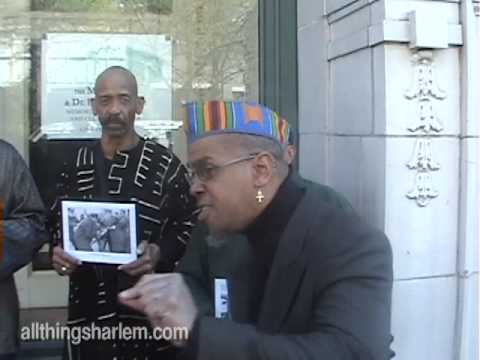
On Wednesday, April 14th, 2010 the Malcolm X Commemoration Committee (MXCC) held a press conference condemning the pending release of Read more

Fran Tarkenton and Tiger Woods on TV show "That's Incredible". source

This is a video in honor of all of the people that have contributed to the International Success of the Read more

Black History Month originated in 1925 when the second week of February was made Negro History Week since it contained Read more

http://www.ted.com Is your school or workplace divided into "creatives" versus practical people? Yet surely, David Kelley suggests, creativity is not Read more

Alison Mills-Newman recalls her early days as an actress and being at the Theatre of Being under the direction of Read more
http://PayItForwardPhilippines.com source

The way we understand our intelligence and abilities deeply impacts our success. Based on social science research and real life Read more

Malcolm X in ehli sunnet yani aşırıklıklardan uzak doğru İslam ı bulduktan sonra yaptığı konuşmalardan biri zannnediyorum. Bilindiği üzere, zenciler Read more

FIND DEALS, COUPONS AND TIPS AT: http://hip2save.com/ Couponing isn't just about saving money and scoring deals. Couponing for me, is Read more
Post Tags :
- amazing stories
- black actors
- black authors
- black coaches
- black education
- black history
- black history movies
- black history quotes
- black movies netflix
- black music stolen by white artists
- black musicals
- black republicans
- black songs
- black writers
- first take
- gamedaybeats
- good deeds
- lebron james
- malcolm x
- martin luther king jr
- michael jackson
- michael jordan
- mr beast
- onyx kids
- oprah winfrey
- pay it forward
- richest black people
- serena williams
- soul food
- steph curry
- ted talks
- tiger woods
- tyra banks
- vytamind