

Willie Francis was sentenced to death by electric chair, miraculously survived the first execution attempt
17-year-old Willie Francis was preparing for his death on May 3, 1946. The teen was put into “Gruesome Gertie,” Louisiana’s electric chair, too scared to say his goodbyes, Francis awaited the inevitable moment when he would sent to his death. However, once the time came, something went wrong. Francis survived the electric chair.
This started a year-long court battle that would go all the way to the U.S. Supreme Court, which would eventually fail and make him known as “the teen who was executed twice.”
After his first execution attempted, Francis gave a rare point of view on what it felt like to have electricity surge in his body.
“The best way I can describe it is: Whamm! Zst!” he said. “It felt like a hundred and a thousand needles and pins were pricking in me all over and my left leg felt like somebody was cutting it with a razor blade. I could feel my arms jumping at my sides … I thought for a minute I was going to knock the chair over…I think I must have hollered for them to stop. They say I said, “Take it off! Take it off!’” I know that was certainly what I wanted them to do—turn it off.”
After the electric chair failed, it was found that it had been set up incorrectly. In those days, the electric chair was portable and was transported by truck from jail to jail in Louisiana to perform executions. The two executioners responsible – Captain Ephie Foster and an inmate named Vincent Venezia, who was working as an assistant electrician within the Louisiana prison system – had been drinking the night before.
Sixteen months before in November of 1944, someone shot Andrew Thomas, a white pharmacist in Francis’ hometown of St. Martinville, La. Two months after the murder, St. Martinsville’s sheriff, E. L. Resweber, called upon the Chief of Police in Port Arthur to arrest “any man” in order to end the case. A few weeks later arrested Francis.
Francis was visiting one of his sisters in Port Arthur, when he was arrested on suspicion of being a drug dealer’s accomplice. However, when the police could not connect him to the drug dealer, they started questioning him about the St. Martinsville murder. The police allegedly found the murdered pharmacist’s wallet and identification card in Francis’ possession.
Then within minutes the police had a signed confession from Francis for the murder, along with a second confession the next day. The police denied any coercion. Three weeks after the arrest, Francis was in front of a grand jury of white men. The teen pleaded not guilty, but his white lawyers attempted to reverse his plea and refused to make an opening statement. Francis’ lawyers did not cross-examine witnesses.
According to All That Is Interesting:
A lot of mystery surrounded the murder weapon. Francis had supposedly stolen the gun from the Sheriff’s deputy, but the deputy had reported the gun missing two months before the murder. Furthermore, the gun wasn’t examined for fingerprints, the bullets found in Thomas’ body weren’t matched with those from the gun, and suspiciously, the gun and bullets were lost before the trial while en-route to the FBI for analysis.
In fact, the gun linked the deputy to the murder. He had even threatened to kill Thomas, whom he suspected of trying to have an affair with his wife. Furthermore, Thomas’ neighbors were woken by gunshots on the night of the murder. One of them claimed to have seen a car’s headlights in Thomas’ driveway. It’s unlikely a poor black teenager had access to a car. For one, Francis couldn’t even drive.
On May 9, 1947, over a year later after the first execution attempt, Francis was strapped into the electric chair once again. At 12:05 pm, the switch was pulled and five minutes later Francis was pronounced dead.
Charles Jackson French heroic actions in World War II saved lives
A select few departing words are trending on social media after the death of the infamously bigoted 70-year-old conservative radio Read more
A driver has come forward, turning himself in on Wednesday for the hit-and-run accident that resulted in the death of Read more

A woman who oversaw a murderous religious cult in Florida in the 1980s was sentenced to 30 years in prison on Read more
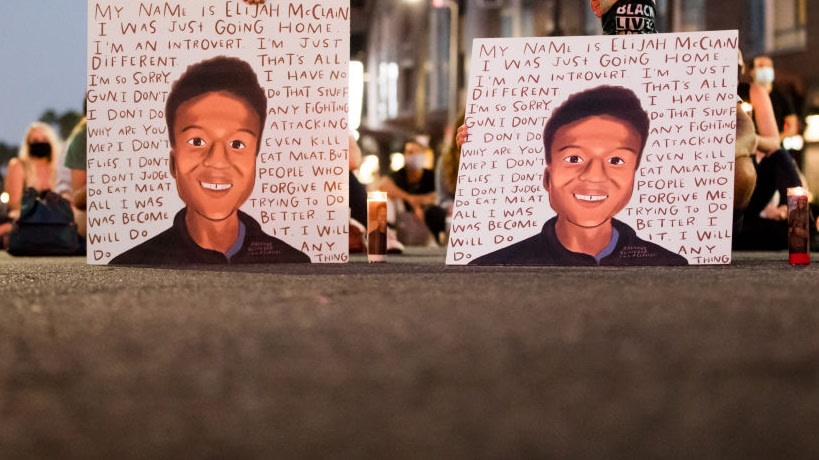
An independent investigation has revealed new details in the case of Elijah McClain, stating that Colorado police and paramedics made several errors Read more

The mother of 11-year-old Cristian Pineda, a boy who died in his family's mobile home during the historic cold weather Read more

February 23, 2021 marks one year since Ahmaud Arbery was fatally shot by Gregory and Travis McMichael as he jogged Read more
D.C. Mayor Muriel Bowser announced her sister died due to complications related to COVID-19 on Wednesday at the age of 64. In a Read more

Police officers who put a hood over the head of a mentally distraught Black man, then pressed his body against Read more

The family of a 12-year-old boy has been pleading with the Atlanta community for help in searching for the person responsible Read more

Georgia high school teacher, Susan McCoy is facing backlash after she told her students Breonna Taylor caused her own death Read more

But the security going up around the Hennepin County courthouse, City Hall and the jail — all in the heart Read more