
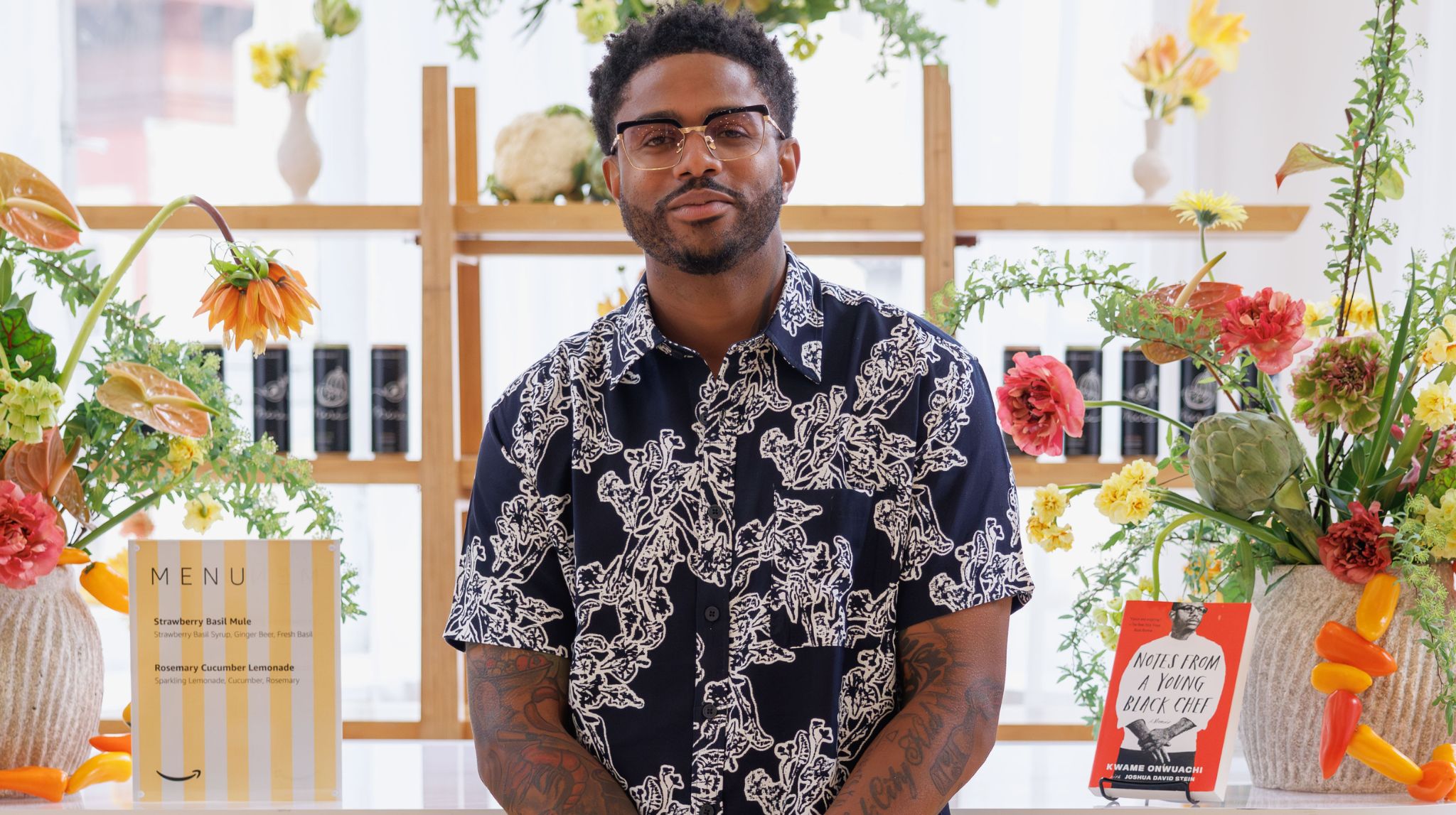
Kwame Onwuachi On Why Food Access Still Matters, And How He’s Taking Action
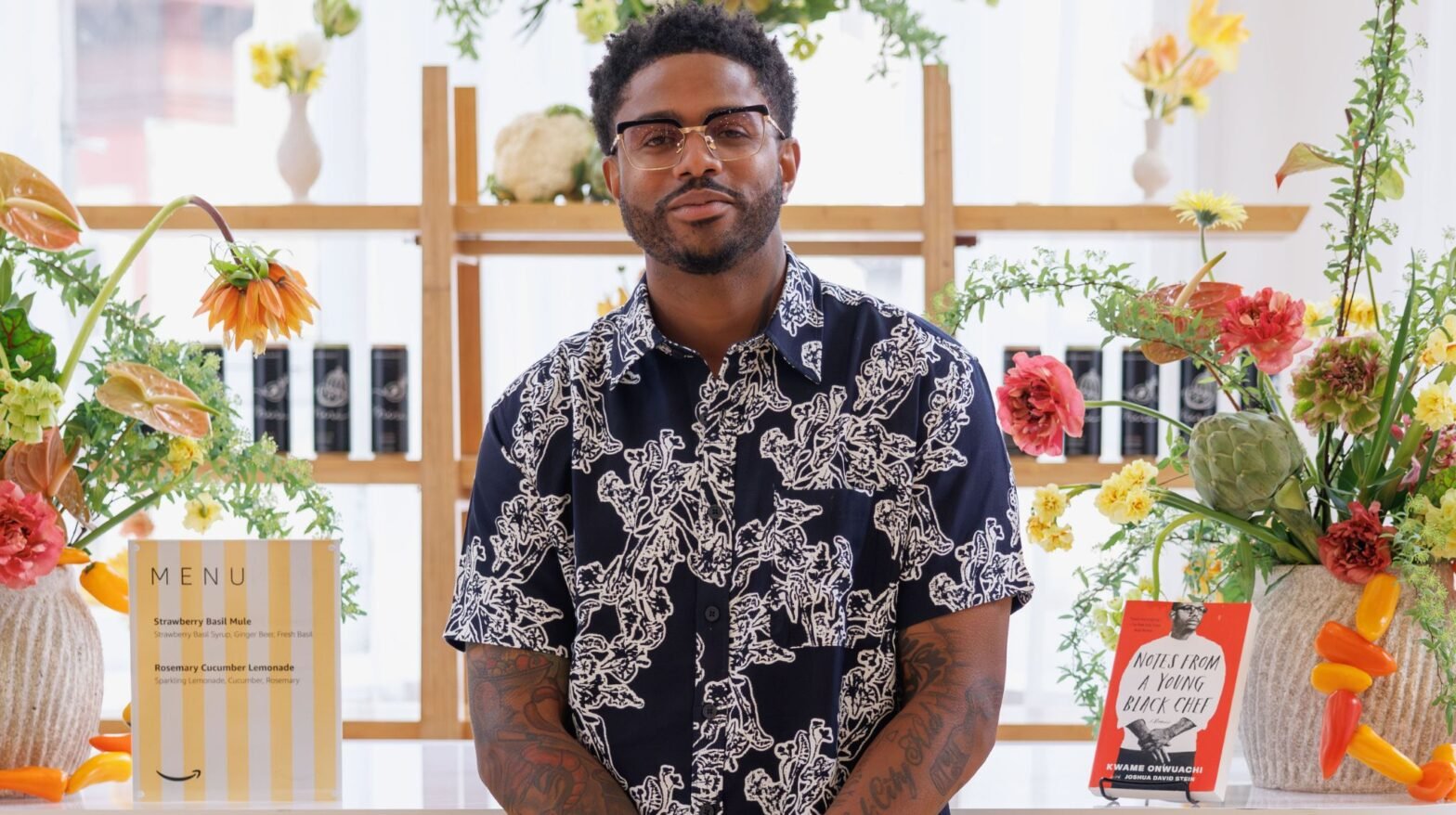
Kwame Onwuachi has built a career rooted in storytelling, using food as a lens to explore culture, identity, and community. From his upbringing between the Bronx and Nigeria to his rise as a James Beard Award–winning chef and restaurateur, his work has consistently centered the idea that access to quality food should be a right, not a privilege. That perspective was front and center at a recent New York City gathering he hosted, where conversations around affordability, innovation, and the future of grocery shopping took shape—including through his partnership with Amazon Access and Amazon Grocery.
In a conversation with Blavity, Onwuachi reflects on how those early experiences continue to guide his mission, the importance of staying rooted in community, and what’s next as he expands his culinary footprint.
You’ve spoken about your upbringing and experiences with food insecurity—how did those early moments shape the way you think about food and access today?
Splitting time between the Bronx and Nigeria growing up, I saw just how universal both the power of food and the pressure of food insecurity can be. Experiencing two very different environments facing similar challenges really put things into perspective for me – you start to understand that access, or lack thereof, to food is a human experience. It’s not confined to one place or one community.
As I’ve grown in my career, I keep coming back to the idea that access to nutritious food is a basic human right. That belief has shaped so much of what I do, from my work with No Kid Hungry to my annual food festival, The Family Reunion.
It’s also what drew me to this collaboration with Amazon. Through programs like Amazon Access, they’re working to make everyday essentials like groceries more affordable and accessible through SNAP EBT and Cash EBT payment acceptance and additional exclusive savings. For me, it’s about being part of solutions that meet people where they are and make a real difference in how families put food on the table.
As someone who blends fine dining with cultural storytelling, how do you stay rooted in your identity while continuing to push boundaries in the culinary world? What does “community” mean to you, and how do you try to reflect that in experiences like your events and restaurants?
I think it starts with exactly what you said: being ‘rooted in my identity.’ Every restaurant, every experience I create carries pieces of my childhood, my early career, and who I am today. Those layers are shaped by my culture and community.
If you take Tatiana for example, the menu is really inspired by the melting pot that is New York City. It’s a love letter to the city, but more specifically to the Bronx – the place where I first fell in love with food. I wanted to create something that reflects that same cultural diversity and energy, where every dish tells a story and feels connected to the community it comes from.
That idea of community is everything to me. It’s about creating spaces where people feel seen, where their stories are reflected, and where food becomes a way to connect us. That mindset carries into the brand collaborations I choose, too. Food insecurity is still a real issue in so many communities and programs like Amazon Access are focused on helping reduce barriers to quality groceries. Amazon’s shopping assistant, Rufus, really resonated with me too because it can make shopping easier for customers and help them plan their grocery list within a budget or find meal inspiration. As someone who cares deeply about equity in the food system, that alignment matters. It has to feel authentic – not just to my work, but to the communities that shaped me.
What made this partnership with Amazon Access and Grocery feel aligned with your personal mission around accessibility?
If there’s one thing I hope people take from my journey with food, it’s my commitment to using it as a way to give back to the places and people who shaped me, and that I’m always looking to work with others who share that same intention around uplifting communities. This collaboration with Amazon Access and Amazon Grocery made sense because we share a belief that access to quality, affordable groceries should not depend on your zip code. When you look at things like EBT payment acceptance, 50% off a Prime membership for government assistance recipients, or discounted grocery delivery options for customers shopping with a registered EBT card, it’s about removing barriers and making everyday essentials easier to reach for more people.
Customers can shop thousands of grocery products on Amazon using these benefits — from fresh produce and proteins to pantry staples — all at great prices with fast delivery. Whether you’re a seasoned home cook or just getting started, the ingredients are right there at your fingertips.
My upbringing taught me that you can take what you have and turn it into something flavorful, nourishing, and meaningful. A lot of people are looking to do the same but just need the right tools. I recently used Rufus while curating the menu for a recent event I hosted with Amazon, to explore different dish ideas and find the right ingredients, and it made the process really simple and personalized.
At the end of the day, it comes back to access and creativity – making sure people have the tools, the ingredients, and the inspiration to put something great on the table, no matter their circumstances.
You’ve got several projects in motion, including your upcoming restaurant, Maroon. What excites you most about this next chapter?
I like to keep myself busy, if you couldn’t tell!
Bringing a first-of-its-kind Afro-Caribbean steakhouse to the Vegas Strip has always been a dream, and I’m so excited for Maroon to open to the public at SAHARA so soon. What really drives me in this next chapter is the same thing that’s always pushed my work forward: the opportunity to tell stories that don’t always get told, and to introduce people to the cultural roots behind the cuisine in a way that feels meaningful and memorable.
I’m also gearing up for the sixth-annual Family Reunion festival this August, which is always one of my favorite times of year. It’s all about bringing people together through food, culture, and shared experience.
For young creatives who look up to your journey, what advice would you give about building a career that’s both impactful and authentic?
Figure out what truly serves you and give yourself permission to stay in that space. And just as importantly, know when it’s okay to walk away from the things that don’t.
I’m big on having emotional equity in what I put my name on – having real ‘skin in the game.’ I take pride in my work, and I put my whole heart into it, because when there’s a genuine connection, the impact is always stronger. People can feel when something is authentic.
On the flip side, when you try to force something you’re not passionate about, and therefore can’t contribute to in a meaningful way, it shows. It won’t serve you, and it won’t serve the work. So my advice is to be intentional about where you invest your time and energy, and make sure it aligns with who you are and what you stand for.
If you look at the history worldwide, Black people have contributed more than anybody else. They have contributed to almost Read more
The official version of Logic's "Soul Food" audio off his 'Under Pressure' album which is out now on Visionary Music Read more
For the 50 million kids who attend public schools in the US, the 2020 election is personal. Watch more 2020 Read more
In this clip from 1965, after leaving the Nation of Islam, Malcolm X appears on CBC-TV's 'Front Page Challenge' weeks Read more

I Have a Dream" is a public speech that was delivered by American civil rights activist Martin Luther King Jr. Read more

✪This one important person in Oprah Winfrey's life wanted nothing to do with her until she was famous. Years later, Read more
Relive the BEST OF Michael Jordan's playoff games through the years! Subscribe to the NBA: https://on.nba.com/2JX5gSN Full Game Highlights Playlist: Read more
The short film for Michael Jackson's ""Smooth Criminal"" was the centerpiece of the feature film Moonwalker, and featured the debut Read more


Paul Pierce and Zach Lowe join Rachel Nichols on The Jump for “Make or Miss,” to discuss Zach LaVine, Steph Read more

Watch the highlights of Serena Williams vs Simona Halep at Australian Open 2021. News from the #1 sports destination and Read more

Check out the Top-10 shots of Tiger Woods' career on the PGA TOUR (excluding majors), feature incredible putting, clutch hole Read more