
Black Residents Say No To Climate Gentrification in Charleston
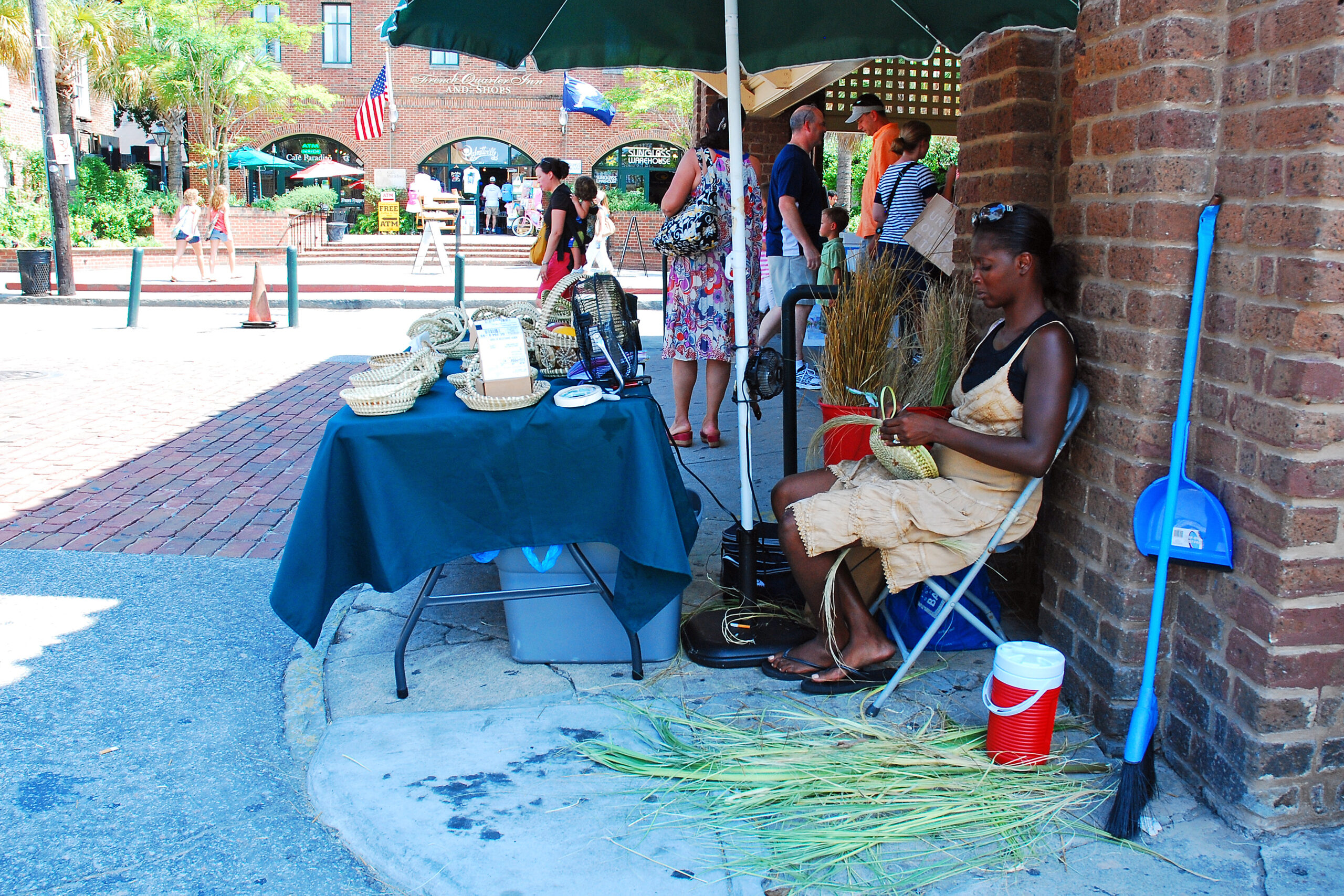
Black people in Charleston, South Carolina are no strangers to gentrification. Over the past several decades, due to “overtly racist policies and practices” to turn Charleston into a tourism hotspot, they’ve been forced out. They begrudgingly abandoned their historically Black communities because they could no longer afford high property taxes or elevated insurance costs which resulted when developers built luxury homes there for wealthy whites.
The most recent type of gentrification in Charleston— called climate gentrification—may be the worst yet. But this time, Black residents are organizing, standing up for their communities, and staying in their homes, often on ancestral lands. Environmental conservation of the South Carolina coastline and adjacent wetlands is a welcome side effect of Black residents’ efforts to say no to climate gentrification in Charleston.
Gentrification in Charleston
In 2017, Charleston was rated the fastest gentrifying city in the United States, according to a survey by Realtor.com. Its modern-day gentrification spiral began in 2001, when low-income Shoreview Apartments, located downtown, was razed and replaced with single-family homes of greater value. Soon after, other Black neighborhoods shifted toward white, middle-class families who could afford to live there.
As a result, within 15 years, between 2000 and 2015, median home prices increased by 78%, effectively preventing working class Black people from living there. So, the city’s racial demographic flipped from roughly two-thirds black to two-thirds white, with a 55% drop in the Black population.
This gentrification was not caused by climate change. But now, climate impacts are accelerating gentrification in Charleston.
Climate change in Charleston
By itself, “climate change really is a Black issue,” said Bernard Powers, formerly the interim CEO of the International African American Museum in Charleston. “People who live close to the coast as we do, we’re the ones who are going to be affected by potential damage from increasingly devastating hurricanes.”
The area of South Carolina most vulnerable to climate change is aptly named the Lowcountry because it’s situated only a few feet above sea level. Parts of Charleston make up the Lowcountry, an area that has been habitually flooded by hurricanes and high tides. In recent years, though, flooding is more regular, even occurring on sunny days.
Charleston is also experiencing accelerated sea level rise, which has already increased by seven inches in 14 years. The National Oceanic and Atmospheric Administration estimates it will continue to rise more than 12 inches by 2050. At that point, two out of every three days will encounter tidal flooding.
Ironically, the luxury condos and structures built on stilts located so close to the coast further destabilize it, hurrying their eventual demise, swept up not only by rising sea levels caused by human-caused climate change but also prone to sinking land according to a 2016 report by the U.S. Environmental Protection Agency.
Climate gentrification in Charleston
Climate gentrification refers to the ways that anthropogenic (human-caused) climate change contributes to shifts in community demographics and the potential displacement of marginalized residents through changes in property values and insurance costs. In this manner, climate gentrification exacerbates housing inequalities.
Situated so close to the sea, Charleston’s Lowcountry ports historically received enslaved Africans. Hundreds of thousands of slaves and their descendants worked the plantations along the Carolinian coast for decades.
After Emancipation, many freed slaves bought inexpensive marshland in the Lowcountry that rich white landowners didn’t want. That property was generally used for farming and passed down for generations within families.
Now, despite rising sea levels, sinking land, and intensified storms, coastal property values are at an all-time high with developers scrambling to buy and build ocean-front condos and luxury resorts for wealthy white people. Many are able to purchase the land for next to nothing at auctions because it has unknowingly slipped into heirs’ ownership.
Heirs’ ownership and climate gentrification in Charleston
Lowcountry land that has been passed down and farmed for generations within Black families is being snatched up by developers who purchase a share in the property. They are able to do so because the original Black landowners did not leave a will, legally designating ownership to family descendants. It’s estimated that 81% of freed black landowners didn’t make wills because of an inability to hire lawyers, a privilege afforded at the time mainly to white people.
Since the land was not legally inherited, it was designated as heirs’ property. The Center for Heirs’ Property Preservation in Charleston County, South Carolina, estimates that there are 105,000 acres of heirs’ property in the 15 counties it oversees.
Heirs’ property may be jointly owned by hundreds of descendants, even those far removed from the property. Legally, each one has a claim to the land. Any one heir can sell their share at any time independently of the others. When this happens, a judge may order that the entire property be auctioned off. In this way, a massive transfer of real estate from Black people to white people has occurred and is still occurring in South Carolina’s Lowcountry.
Thomas W. Mitchell, an expert in heirs’ property at the Texas A&M University School of Law, stated in The Nation: “If the Kennedys, the Bushes, or the Clintons had their property sold under these circumstances, the law would have been reformed” by now.
Fortunately, in 2016, Nikki Haley, then governor of South Carolina, signed the Clementa C. Pinckney Uniform Partition of Heirs’ Property Act. Named for the state senator and pastor murdered in the 2015 massacre at Charleston’s Emanuel African Methodist Episcopal Church, this law mandates several protections for people involved in heirs’ property disputes, making it less likely that Lowcountry farms will be land-grabbed by developers.
Conservation initiatives and climate gentrification in Charleston
One way Black neighborhoods are slowing down the sale of their ancestral land in the Lowcountry is by petitioning the local government to become historic districts. That designation requires any new construction must first be approved by a county commission.
Mavis Gragg, director of the Sustainable Forestry and African American Land Retention Program, is further spearheading efforts to empower Lowcountry Black residents subject to heirs’ property laws to embark on conservation efforts as a strategy to stay on their ancestral lands. “We found that doing conservation, stewardship, and sustainable forestry actually motivates people to take action on the legal part that makes their ownership so precarious,” Gragg stated to Inside Climate News. That particular program puts Black landowners in contact with foresters who can help them grow trees that mitigate flood risk, and with businesses in the sustainable lumber market.
Additionally, some Lowcountry neighborhoods are using the county’s greenbelt program to prevent development. Begun in 2007, the program has so far preserved 45,000 acres in its natural state. By purchasing this land, Black residents allow it to serve as a natural buffer against encroaching high tides and salt water intrusion as well as aid in flood resilience even as Charleston sinks.
“African Americans were environmentalists before the word was even created because of the way in which we live. [They] might not have known about sea level rise, but they understood certain things: If you move from one spot to another, the water is going to adjust. They knew that and they were mindful of their surroundings,” Jennie L. Stephens, CEO of the Center for Heirs’ Property Preservation, stated in Inside Climate News.

More than a quarter of professional footballers in Europe's top leagues are Black. But in all 98 head coaching positions Read more

A Maryland resident is breaking barriers as an entrepreneur, becoming the first Black woman to solely own a tequila brand. Tiffany Hainesworth Read more
Beautiful Black fraternity and sorority couples have existed over 100 years so let’s celebrate their love. We’ve compiled a list Read more

“Black Men Teach is trying to get Black men in elementary school classrooms,” Markus Flynn, executive director of Black Men Read more

California home owners experienced racism and discrimination when they were getting an appraisal for their Bay Area home. “It was Read more
A weeklong series emphasizing investment in Black cis and trans girls is having its inaugural launch this week.Through virtual programming, Read more
As the celebration of Black History Month continues around the country, 2 Chainz honored the special time of the year Read more

Top 10 American Black Billionaires (+ Up&Comings) http://www.blackexcellist.com ---------------------------------------------- Business Inquiries, Partnerships, & Suggestions blackexcellist@gmail.com Support the Movement w/$25 * Read more

Donate to DJ SkyWalker: https://paypal.me/pools/c/8qNqWU4tVr DJ SkyWalker jetzt auch als Artist KINKO 069 in der DeutschRap Szene. Eigene Produktion mit Read more

So you are dating a member of a Black fraternity, you are over at his house and it is cold. Read more

Essential Black authors to read: Ibram X Kendi & Jason Reynolds, Bakari Sellers, Eve Ewing, D.L. Hughley, Mikki Kendall, Mary Read more

Four Black teens were forced off a plane by flight attendants before takeoff claims they were not wearing mask according Read more