

Battle of Alamance | The Regulator Movement | American Civil War | History Continued
The Battle of Alamance, which took place on May 16, 1771, was the final battle of the Regulator Movement, a rebellion in colonial North Carolina over issues of taxation and local control, considered by some to be the opening salvo of the American Revolution. Named for nearby Great Alamance Creek, the battle took place in what was then Orange County and has since become Alamance County in the central Piedmont area, about 9.7 km south of present-day Burlington, North Carolina.
In the spring of 1771, Royal Governor William Tryon left New Bern, mustering and marching approximately 1,000 militia troops west to address a rebellion that had been brewing in western counties for several years, but which had included only minor, scattered acts of violence, followed by refusals to pay fees, disruptions of court proceedings, and continued harassment of government officials. About 2,000 so-called “regulators” had gathered, hoping to gain concessions from the Governor by intimidating him with a show of superior force. Funded by council member and wealthy merchant Samuel Cornell for £6,000, on May 11, Tryon left the county seat of Hillsborough with his militia to confront the Regulators, who had made camp south of Great Alamance Creek in western Orange County, present-day Alamance County.
Some of the Regulators petitioned the Royal Governor to give up seven captured Regulators in exchange for two of his men that they had captured the previous day. Tryon agreed, but after half an hour, the captured officers did not appear. He became suspicious that his positions were being flanked and ordered the militia to march within 30 yards of the Regulators. Shortly thereafter, a large crowd of Regulators appeared in front of the militia, waving their hats and daring the militia to open fire.
At about this time, two men who had been attempting to negotiate peace between the two sides left Tryon’s camp: Reverend David Caldwell and Robert Thompson. Caldwell made it to the field between the two lines but was warned by the Regulators, who saw that the Governor was about to open fire. Thompson was detained by Tryon as a prisoner. Tryon, in a moment of anger, took a musket from a militiaman and shot Thompson dead. Realizing what he had done, he sent a flag bearer named Donald Malcolm with a white flag in hopes of calming things quickly. The flag bearer was himself fired upon by the Regulators, who called out, “Fire and be damned”.
The Regulators lacked the leadership, organization, and ammunition that Tryon had, but the early course of the battle went well for them. They employed what was referred to as “Indian style” fighting, hiding behind trees, and avoiding structure and lines. This allowed two of the Regulators, brothers named McPherson, to capture one of Tryon’s three cannons. Unfortunately for them, the Regulators had no ammunition and it could not be used.
A man considered one of the principal military leaders of the Regulators, Captain Montgomery, was killed by a shell at about the same time a bullet hit Tryon’s hat. The Governor sent a second white flag, but the aide-de-camp was killed while regulator Patrick Muller called for his fellow insurgents to cease fire. Outraged at the disregard of a second white flag, the Governor rallied his troops against the insurgents, whose ammunition was running out. Many of the Regulators fled the field. Delays prevented the 300 reinforcements under Captain Benjamin Merrill from arriving in time. Some of the Regulators remained behind to continue firing upon the militia. Tryon then ordered the woods to be set on fire.
Losses for both sides are disputed. Tryon reported nine dead and 61 wounded among the militia. Other historians indicate much greater numbers, between 15 and 27 killed. Both sides counted nine dead among the Regulators and from dozens to approximately two hundred wounded.
#TodayInHistory
#HistoryToday
#WorldHistoryToday
#TodayInWorldHistory
#TodayInIndianHistory
#ShortDocumentary
#ShortHistoryDocumentary
#ShortHistoricalDocumentary
source

In this sermon, delivered in April 1967 at Riverside Church in New York City, Martin Luther King, Jr. lays out Read more

Finally got my TV situation worked out and I'm back recording again. This was one of the first few games Read more

Black History Month originated in 1925 when the second week of February was made Negro History Week since it contained Read more

Alison Mills-Newman recalls her early days as an actress and being at the Theatre of Being under the direction of Read more
http://PayItForwardPhilippines.com source
Subscribe for more: https://mosr.lnk.to/YTSubscribe NEW Tchami feat. Kaleem Taylor - Promesses (Official Video) http://youtu.be/CH0FbBuPlaQ Download on iTunes (UK only): http://www.smarturl.it/BINGOPLAYERSGETUP Read more

"We Work The Black Seam" This place has changed for good Your economic theory said it would It's hard for Read more
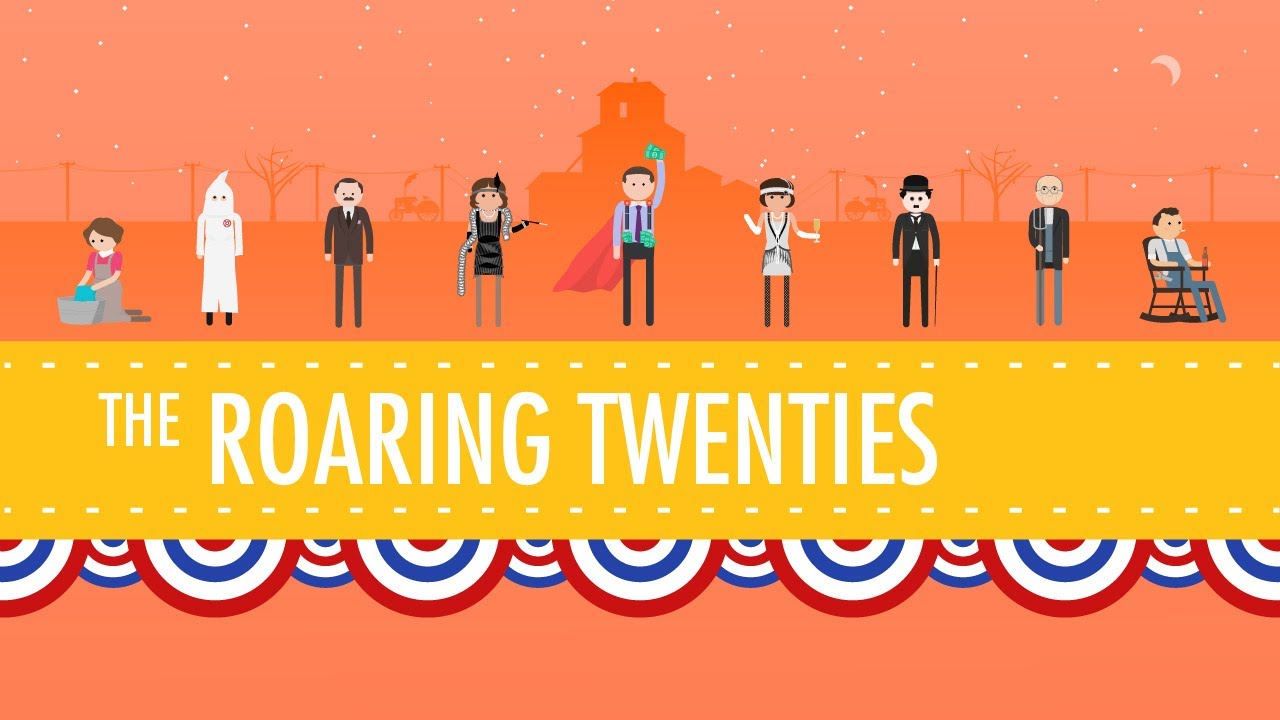
In which John Green teaches you about the United States in the 1920s. They were known as the roaring 20s, Read more

Michael Jordan vs Muhammad Ali. Epic Rap Battles of History NEW ERB OUT NOW! GODZILLA vs KING KONG: https://youtu.be/jhkBAKV1yMg Want Read more

Just me ranting about the problems with stuff Follow me on Twitter @TheRealGregest Add me on Snapcha @TheGregest01 Subscribe to Read more

Unemployment among African-Americans his record low; Candace Owens discusses Trump's impact on the economy. FOX News Channel (FNC) is a Read more

Watch the journey unfold! I will be documenting my life in fashion as a creative director showing the reality of Read more
Post Tags :
- Alamance
- American
- american battlefield trust
- American Civil War
- american history
- american independence
- American independence war
- american revolution
- american revolutionary war
- battle
- Battle of Alamance
- battle of alamance creek
- battle of alamance outlander
- battle of alamance significance
- battle of concord
- battle of lexington
- bunker hill
- Civil
- civil war
- Continued
- george washington
- Great Alamance Creek
- History
- military history
- Movement
- Regulator
- Regulator Insurrection
- Regulator Movement
- revolutionary war
- war
- War of Regulation