
‘This Is Not Democracy’: What The Supreme Court’s Louisiana Redistricting Ruling Really Means For Black Voting Power

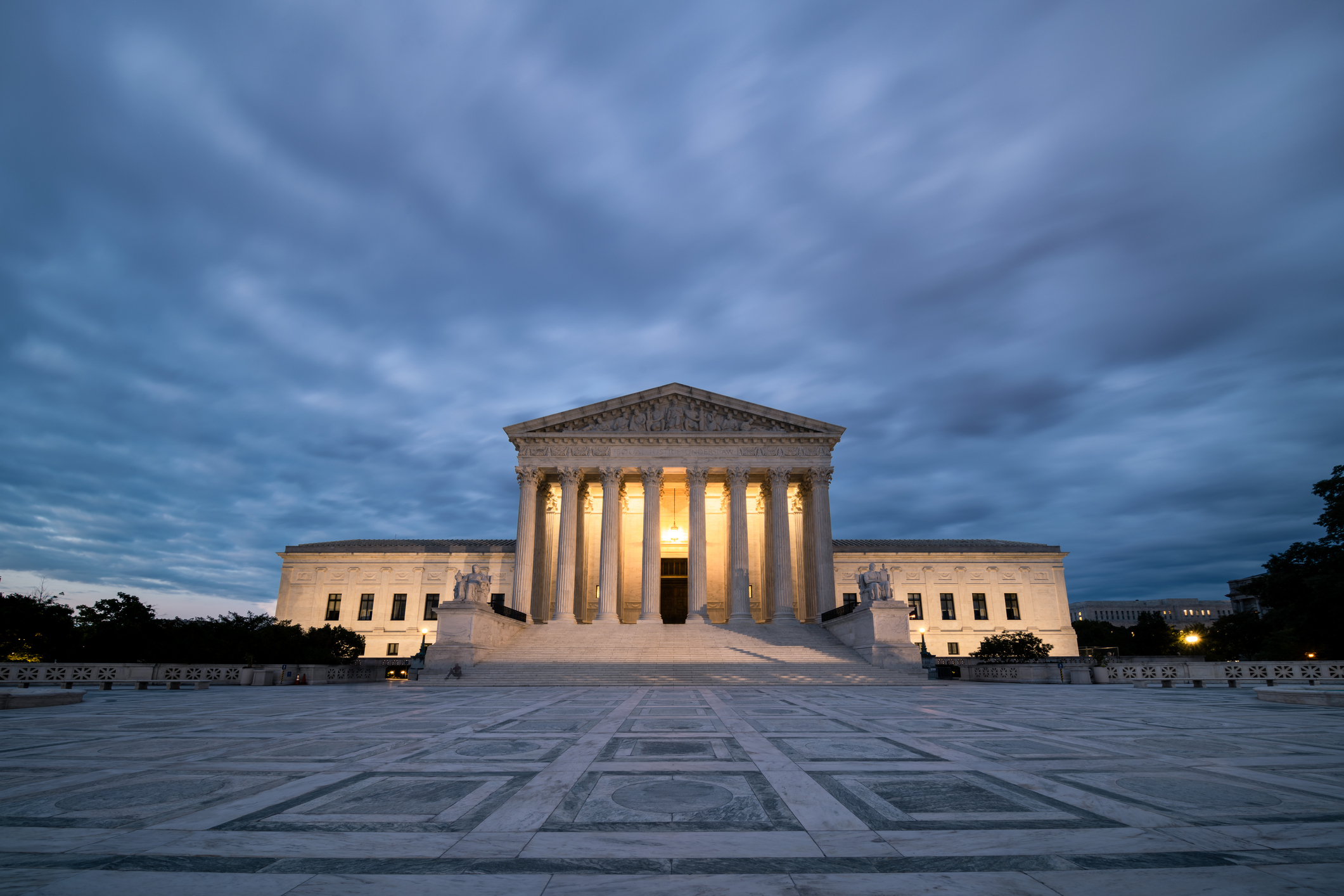
The Supreme Court of the United States decision in Louisiana v. Callais has been simply framed as a dispute over Louisiana’s congressional map, a question about how many majority-Black districts the state should have.
As SCOTUSblog explains, the case centered on whether Louisiana went too far in using race to draw a second majority-Black district, and whether complying with the Voting Rights Act of 1965 can justify that kind of race-conscious redistricting.
But that framing almost completely misses the point. What the Court did in its 6-3 ruling could erode Black political power for decades to come. By raising the bar for proving discrimination in redistricting cases and making it easier for states to defend maps as “partisan” rather than racial, the ruling reshapes how voting rights will be litigated nationwide.
Civil rights advocates warn the consequences will be brutal.
“This ruling makes it less likely that we ever will [be fully represented],” Damon Hewitt, president of the Lawyers’ Committee for Civil Rights Under Law, told Blavity. “The impact of this ruling cannot be understated.”
A legal blow with severe political consequences
At the center of the case was a Louisiana congressional map that included two majority-Black districts, drawn to remedy a prior Voting Rights Act violation. Lower courts had agreed that remedy was necessary, and the Supreme Court disagreed.
In doing so, it made it significantly harder to prove discrimination, particularly by allowing states to justify maps as “partisan,” even when race is deeply intertwined.
Hewitt described the ruling as opening the floodgates: “It basically is an invitation to discrimination… now all states have to say is that we’re doing it for partisan reasons, and they are scot-free.” Former President Barack Obama expressed a similar concern, warning the decision allows legislatures to dilute minority voting power “under the guise of partisanship.”
Today’s Supreme Court decision effectively guts a key pillar of the Voting Rights Act, freeing state legislatures to gerrymander legislative districts to systematically dilute and weaken the voting power of racial minorities – so long as they do it under the guise of…
— Barack Obama (@BarackObama) April 29, 2026
That distinction, between race and partisanship, is now central to how voting rights cases will be litigated. Critics argue it is also increasingly meaningless in a political landscape where race and party are closely aligned.
The slow erosion of the Voting Rights Act
This decision did not happen in isolation.
In Shelby County v. Holder, the Court eliminated federal oversight of voting changes in states with histories of discrimination. More recent rulings narrowed how Section 2 could be used to challenge voting restrictions.
This latest decision goes further, undermining the ability to challenge maps based on their discriminatory effects, not just explicit intent.
Hewitt offered a stark analogy: “Voting rights protections are like a stool,” he said. And “the legs are being broken.”
Without the ability to challenge discriminatory outcomes, proving violations becomes far more difficult.
The threat to Black political power
This case is not just about access to the ballot. It is about what happens after votes are cast.
“This is about electoral and political power,” Hewitt said.
Majority-Black districts, many created through Voting Rights Act litigation, have helped ensure Black representation in Congress. Weakening the legal basis for those districts could reshape the political map nationwide.
Hewitt warned that in the coming years, “Black political power could be radically reduced,” particularly the ability to elect candidates of choice.
Journalist Nikole Hannah-Jones placed the ruling in historical context, pointing to the collapse of Black political representation after Reconstruction. Without meaningful protections, she warned, the country risks repeating that trajectory — particularly in the South.
The Voting Rights Act is essentially dead and it’s quite possible that we will, like when a similar SCOTUS gutted civil rights at the fall of Reconstruction, see a disappearance of much of the Black congressional representation, especially in the most heavily Black states, which are in the South.
— Ida Bae Wells (@nhannahjones.bsky.social) April 29, 2026 at 11:04 AM
Beyond Louisiana
Advocates nationwide are sounding the alarm.
Across the country, redistricting battles are already underway, now under a more permissive legal standard. Reporting from The Guardian and SCOTUSblog shows that courts and lawmakers have been engaged in ongoing disputes over how race can be considered in drawing district lines, particularly in states with significant Black populations.
In states like Texas and Georgia, lawmakers have defended maps challenged for diluting Black voting power by arguing they are partisan rather than racial. In Alabama and Louisiana, courts have ordered the creation of additional majority-Black districts, only to face continued resistance and appeals.
Meanwhile, in Florida, state leaders have redrawn congressional maps in ways critics say weaken Black voting power, again under the justification of partisan advantage. And in North Carolina, courts have stepped back from policing partisan gerrymandering altogether.
Even in states like Virginia and California, where redistricting processes are often described as more transparent, the ruling still matters. The standard for proving discrimination has changed nationwide.
The Court has effectively provided a roadmap for states. If lawmakers can frame their decisions as partisan, even when those decisions disproportionately affect Black voters, courts may now be less likely to intervene.
The limits of potential remedy
Advocates are already calling for new federal legislation, including the John Lewis Voting Rights Advancement Act, a bill designed to restore key protections of the Voting Rights Act of 1965 by requiring federal oversight of voting changes in states with histories of discrimination. But even that may not fully address the shift.
“A new statute can’t trump the Supreme Court’s constitutional analysis,” Hewitt said.
In other words, the Court has not just interpreted the law. It has reshaped the legal framework itself.
What now?
For Hewitt and other civil rights advocates on the frontlines, the stakes are clear.
“This is not democracy,” he said.
If states can redraw maps that weaken Black voting power and defend them as partisan, the burden shifts almost entirely onto those trying to prove discrimination. And as that burden grows heavier, the protections that once made those challenges possible begin to erode.
What happens next, in courts, in Congress, and at the ballot box, will determine whether those protections can be rebuilt, or whether they are allowed to be dismantled in plain sight.”
If you look at the history worldwide, Black people have contributed more than anybody else. They have contributed to almost Read more

The official version of Logic's "Soul Food" audio off his 'Under Pressure' album which is out now on Visionary Music Read more
For the 50 million kids who attend public schools in the US, the 2020 election is personal. Watch more 2020 Read more
In this clip from 1965, after leaving the Nation of Islam, Malcolm X appears on CBC-TV's 'Front Page Challenge' weeks Read more

I Have a Dream" is a public speech that was delivered by American civil rights activist Martin Luther King Jr. Read more

✪This one important person in Oprah Winfrey's life wanted nothing to do with her until she was famous. Years later, Read more

Relive the BEST OF Michael Jordan's playoff games through the years! Subscribe to the NBA: https://on.nba.com/2JX5gSN Full Game Highlights Playlist: Read more
The short film for Michael Jackson's ""Smooth Criminal"" was the centerpiece of the feature film Moonwalker, and featured the debut Read more


Paul Pierce and Zach Lowe join Rachel Nichols on The Jump for “Make or Miss,” to discuss Zach LaVine, Steph Read more

Watch the highlights of Serena Williams vs Simona Halep at Australian Open 2021. News from the #1 sports destination and Read more

Check out the Top-10 shots of Tiger Woods' career on the PGA TOUR (excluding majors), feature incredible putting, clutch hole Read more