
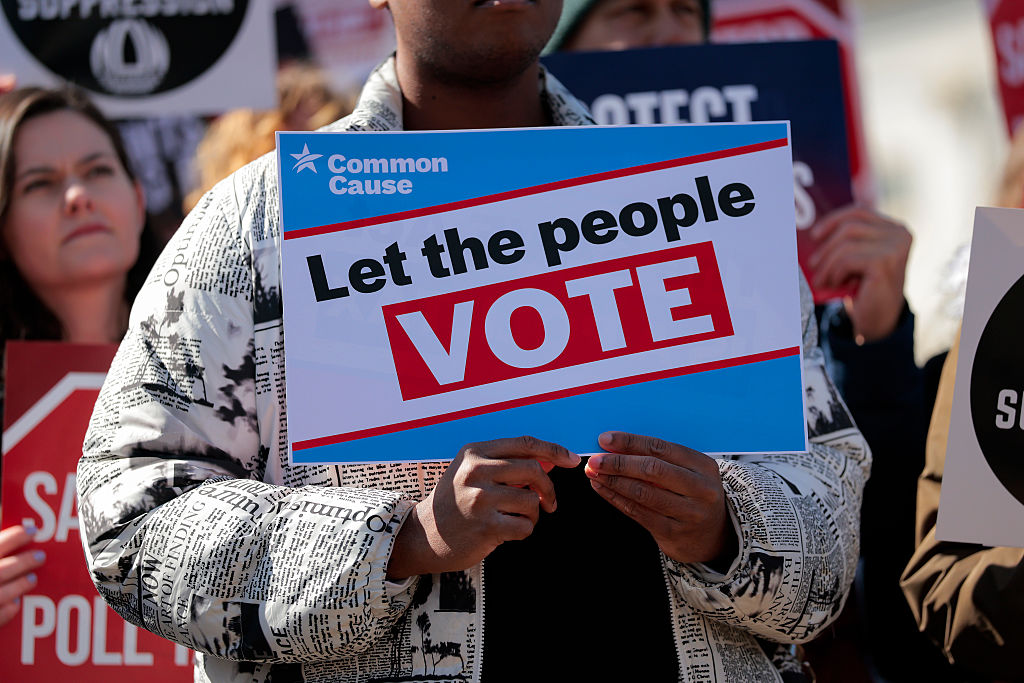
Republicans Moving Quickly To Eliminate Majority-Black Congressional Districts After Supreme Court Guts Voting Rights Act
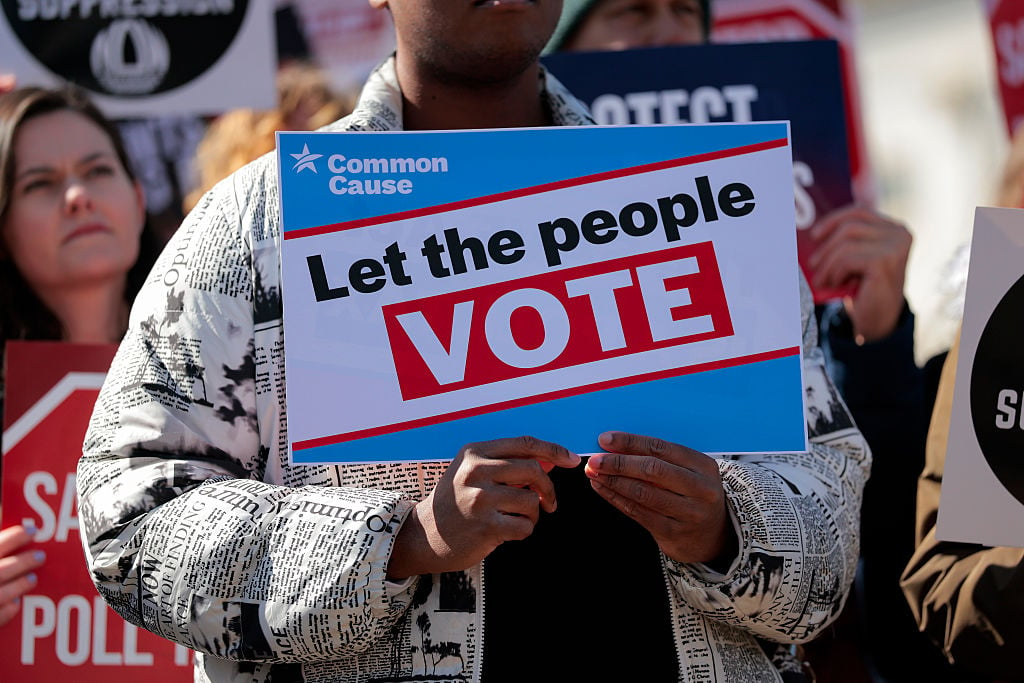
The Supreme Court ruled to eliminate one of Louisiana’s two majority-Black districts, with the Court’s conservative majority placing severe limits on when and how race can be factored into districting processes. The ruling further weakens the Voting Rights Act of 1865. It also threatens to create a significant drop in Black representation in Congress as Black voting power is diluted across Republican-controlled states.
Supreme Court weakens Voting Rights Act in ruling against Black Louisiana district
On Wednesday, the Supreme Court ruled that the process of creating a second majority-Black congressional district in Louisiana relied too heavily on race. Justice Samuel Alito, writing for the six conservatives on the Court, determined that the Louisiana congressional map that created the district “is an unconstitutional gerrymander.” The 6th Congressional District, represented by Democratic Rep. Cleo Fields, was drawn to incorporate parts of Alexandria, Baton Rouge, Lafayette and Shreveport, making two of the state’s six districts Black to coincide with a population that is roughly one-third Black as well. Justice Elena Kagan, who dissented along with the Court’s two other liberal justices, warned that the ruling effectively guts Section 2 of the Voting Rights Act of 1965, nullifying a provision that prohibited states from drawing district lines to dilute the voting power of minority populations.
“The consequences are likely to be far-reaching and grave. Today’s decision renders Section 2 all but a dead letter,” Kagan wrote in her dissent.
The ruling in the Louisiana case comes over a decade after a 2013 Supreme Court decision struck down a provision of the Voting Rights Act that required states with a history of racial discrimination to receive prior federal approval before changing voting laws. That ruling, combined with Wednesday’s decision, significantly weakens the power of the Voting Rights Act.
Following the ruling, former President Barack Obama warned, “Today’s Supreme Court decision effectively guts a key pillar of the Voting Rights Act, freeing state legislatures to gerrymander legislative districts to systematically dilute and weaken the voting power of racial minorities – so long as they do it under the guise of ‘partisanship’ rather than explicit ‘racial bias.’”
New wave of redistricting efforts begins as GOP seeks to eliminate Black districts
Obama’s fears appear to be materializing already. Louisiana’s Republican Gov. Jeff Landry is postponing the state’s House primaries to redraw district lines in light of the Supreme Court’s decision. Conservatives in Alabama, Georgia, Mississippi, South Carolina and Tennessee — all states with histories of oppressing Black populations and discriminating against Black voters — have called for special legislative sessions to redraw their states’ district lines in light of the Court’s ruling.
President Donald Trump, reacting to the Court’s ruling in comments given from the Oval Office, encouraged Republican-controlled states to redraw their district lines.
“I would say generally I would think that they would want to do it,” Trump said.
It’s unclear how many states would be able to redraw their lines in time for this year’s midterm elections. Still, in the long run, an analysis by NPR shows that at least 15 congressional districts could be eliminated because of the Supreme Court’s ruling. The impact of these Republican redistricting efforts could create the largest drop in Black congressional representation in U.S. history, exceeding the decline that happened in 1877 after the post-Civil War period of Reconstruction ended. The push to eliminate majority-Black districts across the South coincides with a separate race to gerrymander states ahead of this year’s midterm elections. Trump started this partisan process when he pushed Republican-controlled states such as Texas, Missouri and North Carolina to redraw their maps to add Republican seats to the House of Representatives. Democratic-led states, including California and Virginia, have responded with redistricting efforts, adding Democratic seats to their states. The impact of these moves will be felt in this year’s elections and will reverberate for years to come. Beyond potentially determining which party controls Congress next year, the Supreme Court’s decision sets the stage for Black voters and Black politicians to potentially see their political power rolled back to a degree never before seen in the U.S.
If you look at the history worldwide, Black people have contributed more than anybody else. They have contributed to almost Read more

The official version of Logic's "Soul Food" audio off his 'Under Pressure' album which is out now on Visionary Music Read more
For the 50 million kids who attend public schools in the US, the 2020 election is personal. Watch more 2020 Read more

In this clip from 1965, after leaving the Nation of Islam, Malcolm X appears on CBC-TV's 'Front Page Challenge' weeks Read more

I Have a Dream" is a public speech that was delivered by American civil rights activist Martin Luther King Jr. Read more

✪This one important person in Oprah Winfrey's life wanted nothing to do with her until she was famous. Years later, Read more

Relive the BEST OF Michael Jordan's playoff games through the years! Subscribe to the NBA: https://on.nba.com/2JX5gSN Full Game Highlights Playlist: Read more

The short film for Michael Jackson's ""Smooth Criminal"" was the centerpiece of the feature film Moonwalker, and featured the debut Read more


Paul Pierce and Zach Lowe join Rachel Nichols on The Jump for “Make or Miss,” to discuss Zach LaVine, Steph Read more

Watch the highlights of Serena Williams vs Simona Halep at Australian Open 2021. News from the #1 sports destination and Read more

Check out the Top-10 shots of Tiger Woods' career on the PGA TOUR (excluding majors), feature incredible putting, clutch hole Read more