
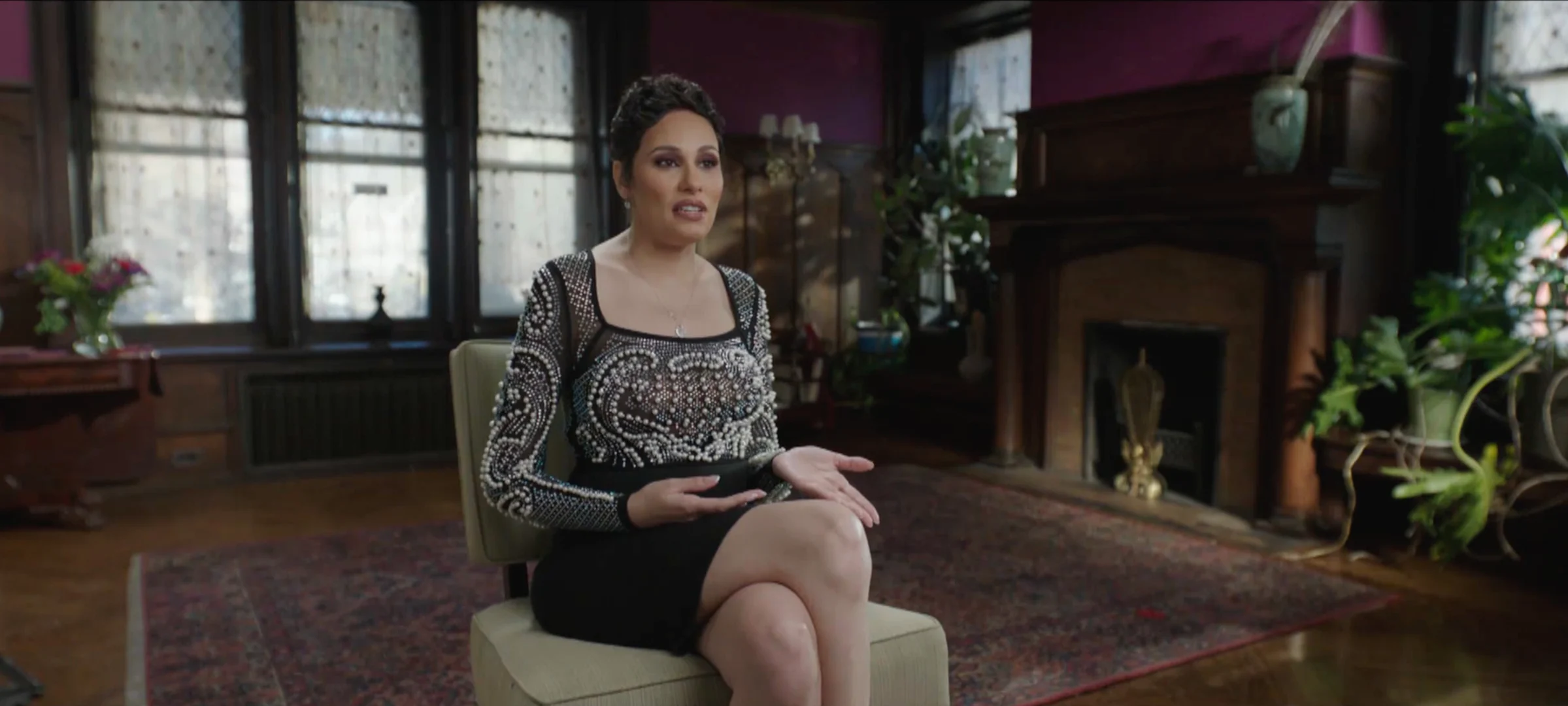
‘ANTM’s Angelea Preston On Forgiveness And Forging Forward Amid E!’s ‘Dirty Rotten Scandals’ Episode
There are several standouts from America’s Next Top Model, one of which is Angelea Preston. She was eliminated near the end of her original cycle before returning for the All-Stars and winning. Unfortunately, her title was stripped, initially without reason, after producers said they discovered she’d engaged in escorting services in her past. The blow was devastating personally and professionally, and she details the experience in E!’s Dirty Rotten Scandals series.
As ANTM remains a topic of social conversation, Preston is pressing on. The award-winning journalist is back in her native hometown of Buffalo and making great strides, which she says would have never been possible had she not hit rock bottom as a result of the show. Blavity spoke with Preston about her life after the show, and why she chose forgiveness.
Let’s take it back to the beginning. During the cycle you landed on the show, was that the first cycle that you actually auditioned or had you auditioned prior? And what was your audition process like?
I auditioned two cycles before I actually landed on the show. I was on the first episode of cycle 12 and then didn’t make it into the house because they wanted me to do anger management. As far as my audition process, at first, I was just filling out apps, and they didn’t call me back or anything. And I figured it out pretty quickly that it took more than just that; it seemed a bit rigged. And then I ended up going to Knoxville. I took a Greyhound down there. I’d met a girl who went to Tuskegee University, and she was there auditioning as well.
And I went to Knoxville because I heard the casting director, Michelle Mock, was going to be there. Prior contestants that had been on previous cycles, whenever they spoke about getting on the show, they’d also mention being in front of Michelle Mock when they got selected. So I looked on the internet, and I saw all the dates that Michelle Mock was going to be at the auditions, and Knoxville was one of the dates. That was the first time that I went to audition after filling out the applications, but it wasn’t for the cycle that I originally went on, which was cycle 12.
Did you end up completing anger management?
I did because I was trying to be on the show. And at the time, I didn’t even know if they had affordable anger management classes back home in Buffalo. But Michelle Mock told me to research some in my area, and most of them were free. So I did what she suggested, and I found a free class. I completed it and got my certificate, and emailed a copy to Michelle Mock, just knowing that I’d be on the very next cycle. There were several girls from previous seasons who’d auditioned and were told to come back, and they’d be on the following season. Unfortunately, that didn’t happen for me because the next season they did was for short models. So I had to wait. But once the time came around, I auditioned again and got in.
Something that has always been puzzling to viewers is learning of the psych evaluation process. How extensive are these evaluations?
The psych eval is super long. They asked you so many questions, but in different ways. They switch up the way they ask the questions to see if your answers are consistent.
Initially, I figured they were all up in my business for a good reason. It is an unnatural environment we’re about to go in, so they want to make sure that everyone is safe. You’re throwing somebody into this environment where they’re going to be filmed 24/7, they want to make sure that your mental health is good and that you’re not a danger to yourself or to others. I think some of that is true, but after watching the stories from the documentary I participated in, and then also the Netflix docuseries, it started to make me question the purpose of the psych evaluations. You hear some of the girls say they told them certain things during their evaluations that were essentially used against them later, and caricatures were created.
I understand reality competition was still in its infancy. Having those evaluations at the time seemed to make sense because Top Model was one of the first reality shows of its kind. There was no playbook on how to do it necessarily. But hindsight is everything.
You spoke about it being an unnatural environment. They also spoke about having strict rules in the house to basically keep things from being leaked. What were some of those rules? And were you paid to be on the show by the time the season you participated in aired?
So, in cycles 12 and 14, I was not paid. Cycle 17, I was paid, we were all paid, but not what we should have been paid. Initially, we did receive a stipend, but that was for food, so we had to buy our own food. I pocketed most of that money and saved it until the end. You have to remember, we didn’t have jobs, we were on the show for however long. So I figured that once the show ended, I needed to walk away with some sort of money because I was broke. So if the stipend was $300, I’d spend $50 and pocket the rest.
For the rules, we couldn’t have phones; that was the biggest thing. I get why we couldn’t have phones because nobody wants to watch a reality show where we’re talking on our phones and calling home the whole time. There was also something called an ice period, where if cameras were not around, we couldn’t talk. So we were silent because the idea is for everything to be captured on camera. Not being able to talk was difficult. There were ice periods during eliminations, which lasted hours while the judges were deliberating, and we couldn’t talk during those periods, which were torturous.
By the time your cycle started, Tyra was involved but not as immersed in the shoots and in creating personal relationships necessarily with the contestants as she was in the beginning. What was your interaction like with her during the cycles that you participated in? Was it different cycle to cycle, or was it pretty much the same?
No, it was pretty much the same. I wish I could have had more interaction with her because I watched the previous cycles, and she was much more invested in the girls during those cycles, so I expected the same. The cycles that I watched, she was more hands-on with the girls and more personable, but by the time my cycles rolled around, it was very much like just business, like she’s there for work. We don’t have any interaction with her off camera, and the only time that we would see her would be on camera. It was disappointing because growing up, she was always my personal favorite. So getting to be in her presence was exciting. But interaction was minimal.
After being eliminated the first time around, you spoke about not being able to make a living as a model because the realities of the real world modeling versus the contained environment in ANTM was different. Talk to me a little bit about what your life was like. After the first elimination, were you able to land any work at all as a model, and what were you doing in between that time?
It was so it was rough. It was very rough for me because of the edit that I got. I wasn’t marketable. Agencies thought that I was rough around the edges. Initially, it was just a feeling, but it was later confirmed by a friend of mine, Alex, who was on the same cycle as me because she’d take me with her to different castings, and she informed me that an agency rep told her that though they loved me, I was not marketable. As a model, it’s your job to sell a product. And they didn’t view me in that way. It was sad because there were several girls from my cycle who got signed to major agencies in New York and beyond and I was just stuck. It was a confusing time, because I knew I had the talent. I couldn’t figure out how to make a living as a model. And at the time, I didn’t want to go back to working a 9-5. I was embarrassed. It was like I was so close to my dreams but I couldn’t reach them.
Did you ever try to go the urban model route? There were hip hop fashion labels and brands at the time, like Baby Phat, Rockawear, etc., or even video modeling?
I did try that route, for sure. But even with the video modeling world, I didn’t fit that aesthetic. I was not curvy. I was extremely thin and tall. I had the look and frame to walk on these runways, but because I was on the show, nobody wanted to work with me. As far as urban modeling, I didn’t fit that standard. So it’s like I didn’t fit in either world.
You spoke about coming back and doing so with a vengeance. You wanted to correct your previous edit, and you wanted to win and really be able to make a living as a model. And obviously, initially, you won, but your title was stripped. Did you ever hear from Tyra or anyone else out within the production or the realm after they met you in New York to deliver the news?
Their PR people did call me, maybe like a month later, to talk about re-filming the show, and that was like the only time that they reached out to me, was to see if I wanted to participate in re-filming. And I said no. I refused to be used in that way. It was unfair. Actually, Allison, who was in the final three in the cycle that I won, gave me a heads-up that they’d call me, so I knew in advance.
There was another time when I had done an episode of MTV Made, and I was a homecoming queen coach for a group of students out in Texas, and I was supposed to get permission from the network to do that. But after they had taken everything away from me, I did what I wanted. They ended up finding out that I filmed the episode of Made, and the attorney for the network called me and let me know that I ruffled their feathers. I didn’t care. I had to try and figure out my own path at that point. So no, after that meeting and them giving me the $300 in cash, that was it.
Did you ever consider legal action? Was there a settlement?
I did sue. And it was such a long process. It took five years. It was exhausting. In the beginning, we were all full steam ahead. My team felt it was an open and closed case. They felt they’d pay me to keep quiet. But they fought me tooth and nail. And they had the resources to do so. My attorney called me and basically informed me that the arbitrator threw the case out and that I could re-file, but I was over it at that point. I didn’t want anything else to do with it. By that point, I was in a different place.
There’s been a lot of conversation about who is to blame for the shenanigans on the show. Tyra’s at the center; she’s the EP. She’s admitted that she was in the editing bay for, if not all of the cycles, most of the cycles, especially in the beginning. But do you think that there is someone who is more at fault than the other, or is there enough blame to go around?
Oh it’s not just Tyra. Ken Mock is to blame, too. Everybody is throwing Tyra to the fire, and I get why. But I think it’s unfair to just solely put the blame on her. Ken Mock called the shots. I was on the show several times. I’ve seen in filming where he has called the shots over her. So, I think that people need to hold him to the fire, maybe even more so than her, because he is the creator of the show as well, and because she is the face of the brand, and because she is the supermodel, and because she’s Tyra Banks, it’s easy to just point all fingers at her. Everyone played a role. The judges played a role. It was a collective experience.
How have you been able to move forward from all of this?
It sounds cliché, but time does heal all wounds. Now, I am walking in my purpose now. Had they not stripped me of everything, I wouldn’t have my son, and I wouldn’t have a career as a journalist. In some ways I’m thankful that that happened. At the time, it was terrible. But I’m years removed from it. And I am an award-winning journalist and making an impact for the BIPOC community in Buffalo. My life is great now, and it’ll keep getting better.
If you look at the history worldwide, Black people have contributed more than anybody else. They have contributed to almost Read more
The official version of Logic's "Soul Food" audio off his 'Under Pressure' album which is out now on Visionary Music Read more
For the 50 million kids who attend public schools in the US, the 2020 election is personal. Watch more 2020 Read more
In this clip from 1965, after leaving the Nation of Islam, Malcolm X appears on CBC-TV's 'Front Page Challenge' weeks Read more

I Have a Dream" is a public speech that was delivered by American civil rights activist Martin Luther King Jr. Read more

✪This one important person in Oprah Winfrey's life wanted nothing to do with her until she was famous. Years later, Read more
Relive the BEST OF Michael Jordan's playoff games through the years! Subscribe to the NBA: https://on.nba.com/2JX5gSN Full Game Highlights Playlist: Read more
The short film for Michael Jackson's ""Smooth Criminal"" was the centerpiece of the feature film Moonwalker, and featured the debut Read more


Paul Pierce and Zach Lowe join Rachel Nichols on The Jump for “Make or Miss,” to discuss Zach LaVine, Steph Read more

Watch the highlights of Serena Williams vs Simona Halep at Australian Open 2021. News from the #1 sports destination and Read more

Check out the Top-10 shots of Tiger Woods' career on the PGA TOUR (excluding majors), feature incredible putting, clutch hole Read more