
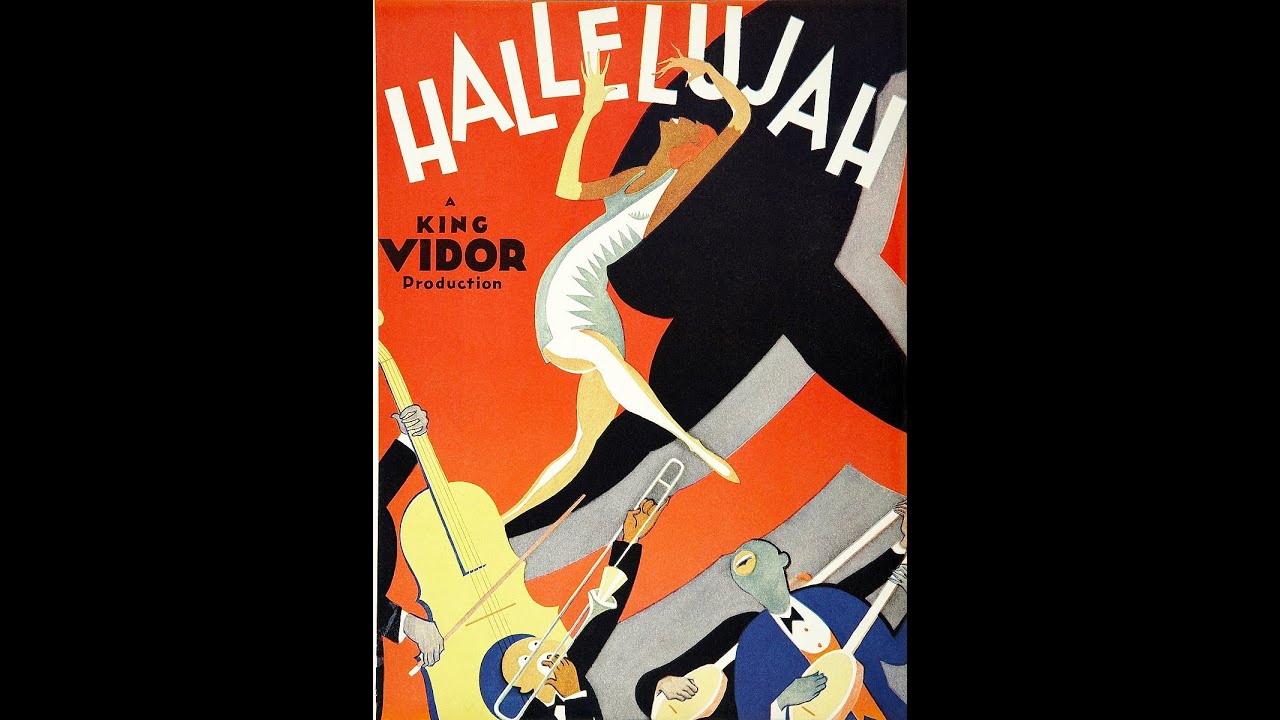
Hallelujah (1929) | Oscar Nominated Black Cast Film
HALLELUJAH is an American musical drama film with an all-African American cast an they sing “negro spirituals.” It presents a relatively non-stereotyped view of African-American life. It was released on August 20, 1929
A sharecropper decides to become a preacher after falling for a vamp from the city.
Hallelujah was King Vidor’s first sound film, and combined sound recorded on location and sound recorded post-production in Hollywood.
King Vidor was nominated for a Best Director Oscar in 1930 for the 3rd Academy Awards (during this time the movie nominated weren’t for the calendar year, instead were for movies released from August 1, 1929 to July 31, 1930.)
In 2008, Hallelujah was selected for preservation in the United States National Film Registry by the Library of Congress as being “culturally, historically, or aesthetically significant.”
Directed by King Vidor
Written by Wanda Tuchock (scenario), Richard Schayer (treatment), Ransom Rideout (dialogue), and King Vidor (story)
Cast:
Daniel L. Haynes as Zeke
Nina Mae McKinney as Chick
William Fountaine as Hot Shot
Harry Gray as Parson
Fanny Belle DeKnight as Mammy
Everett McGarrity as Spunk
Victoria Spivey as Missy Rose
Milton Dickerson, Robert Couch, Walter Tait as Johnson Kids
Dixie Jubilee Singers
and more
Soundtrack (uncredited)
Sometimes I Feel Like a Motherless Child
Sung offscreen during the opening credits
Go Down Moses (Let My People Go)
Arranged by Henry Thacker Burleigh
Sung offscreen during the opening credits
Old Folks at Home (1851) aka “Swanee River”
Written by Stephen Foster
Sung a cappella by the group picking cotton
Bridal Chorus (1850) from “Lohengrin”
Music by Richard Wagner
Played on a harmonium by Victoria Spivey when Adam gets married
Waiting at the End of the Road (1929)
Written by Irving Berlin
Sung by Daniel L. Haynes and the Dixie Jubilee Singers
Reprised by Daniel L. Haynes at his prayer meeting
Swanee Shuffle (1929)
Written by Irving Berlin
Played at the band at the night spot and sung by Nina Mae McKinney
Danced to by her, other patrons and the waiters
Swing Low, Sweet Chariot
Written by Wallis Willis
Arranged by Henry Thacker Burleigh
Sung a cappella by Daniel L. Haynes while mourning his brother’s death
Get on Board Little Children
Traditional Spiritual
Sung a cappella by the congregation
(Gimme Dat) Old Time Religion
Traditional spiritual
Sung a cappella by the congregation
Reprised by Nina Mae McKinney
St. Louis Blues (1914)
Written by W.C. Handy
Sung a cappella and hummed by Nina Mae McKinney
Goin’ Home
Music based on “Symphony No. 9, Largo” by Antonín Dvorák
Adapted by William Arms Fisher
Lyrics by William Arms Fisher
Played on guitar and sung by Daniel L. Haynes
This film is in the public domain (although some music may still be copyrighted) meaning it has been identified as being free of known restrictions under copyright law, including all related and neighboring rights. You can copy, modify, distribute and perform the work, even for commercial purposes, all without asking permission. Corporations lobbied Congress to get U.S. copyright laws extended by 20 years, twice! Because of that, it allows published works to be under copyright for almost a century and corporations to squeeze every last ounce of profit from them even long after the profitability has past. It keeps people from enjoying art, which is the purpose of art.
#1920smovie #blackfilm #oscarnominated #KingVidor #publicdomainfilms #publicdomainmovies
source

Floyd Keith, executive director of the Black Coaches Association, discusses the lack of minority head football coaches in the college Read more

hiphopmekka.com, old school hip hop community for real hip hop fans aswell as modern underground! Show your own Emcee/DJ skills Read more

Ten Things I want to say a Black Woman by The Strivers Row poet Joshua Bennett http://thestriversrow.com/ http://www.facebook.com/TheStriversRow source

Lyrics: [Intro] Now this is what they've been waiting for Ya dig, Santana Weezy F. Ay Wayne What up man Read more

Black conservatism through the lens of the 2008 presidential race. source

Here is 18 GOOD things about Black Ops Wii, and if you want to see the 31 bad things, click Read more
![{[OFFICIAL]} Black Actors Guild Video Bios](https://i.ytimg.com/vi/2qv1q6wE5w0/hqdefault.jpg "{[OFFICIAL]} Black Actors Guild Video Bios")
Get to know the Guild a little better through these mini-video bios! More are on the way. source

Black History Month originated in 1925 when the second week of February was made Negro History Week since it contained Read more

Alison Mills-Newman recalls her early days as an actress and being at the Theatre of Being under the direction of Read more

Rh films Soundtrack for the film REAL LIFE ft. Reggae artist Amrah. source


"We Work The Black Seam" This place has changed for good Your economic theory said it would It's hard for Read more